How Swimming Reshaped My Body—And Why It Might Change Yours Too
Have you ever wondered why so many athletes have that long, lean physique? I didn’t either—until I started swimming consistently. Within weeks, I noticed changes I never expected: better posture, reduced stiffness, and a body that felt more balanced. It wasn’t just about losing weight—it was realignment. As a fitness professional, I began digging deeper into how swimming uniquely supports body adjustment. What I found wasn’t just effective—it was transformative. The water didn’t just challenge my endurance; it quietly retrained my posture, eased chronic tension, and restored a sense of physical harmony I hadn’t realized I’d lost. This is not a story of extreme fitness, but of intelligent movement—and how one accessible exercise can recalibrate the body in profound ways.
The Hidden Problem: How Modern Life Distorts Our Bodies
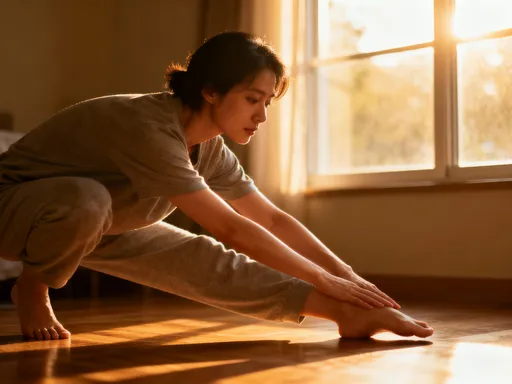
Most adults spend the majority of their day seated—behind a desk, in a car, or on a sofa—often leaning forward to view screens. This seemingly harmless routine, repeated over months and years, creates a cascade of physical consequences. The chest muscles shorten, the shoulders roll inward, and the head drifts forward, placing strain on the neck and upper spine. This common postural pattern, often called 'tech neck' or 'upper crossed syndrome,' is now so widespread it’s nearly considered normal. Yet, it is far from natural. The human body is designed for movement, variation, and balance, not sustained static positions. Over time, these imbalances lead to chronic discomfort, reduced mobility, and even nerve compression.
Muscular asymmetries develop subtly. One side of the body may become dominant due to repetitive motions or habitual postures. For example, carrying a heavy bag on one shoulder or favoring one leg while standing can create uneven loading in the pelvis and spine. These small deviations compound, altering gait, distorting alignment, and increasing the risk of joint wear. The body compensates by recruiting muscles in inefficient ways, which can result in fatigue, pain, and a sense of physical heaviness. Many people adapt to this discomfort, accepting stiffness as an inevitable part of aging. But research in biomechanics and physical therapy shows that much of this decline is preventable.
This is where swimming emerges as a powerful corrective tool. Unlike many land-based activities that reinforce existing imbalances—such as running with a slight limp or lifting weights with poor form—swimming offers a unique environment where the body can reset. The water supports the joints, reduces the impact of gravity, and encourages symmetrical movement. It provides a rare opportunity to move without the usual constraints of daily posture. In this sense, swimming is not merely exercise; it is a form of physical re-education. It allows the body to experience alignment in a way that is difficult to achieve on land, making it an ideal countermeasure to the postural distortions of modern life.
Why Water? The Science Behind Buoyancy and Body Realignment
The transformative effects of swimming begin with the physical properties of water. Buoyancy, the upward force exerted by water, counteracts gravity and reduces the effective weight of the body by up to 90% when fully submerged. This dramatic unloading allows joints to move with greater freedom and less resistance. For individuals with joint pain, stiffness, or arthritis, this means they can perform full-range movements without the discomfort typically associated with weight-bearing exercise. The spine, in particular, benefits from this decompression. In water, the vertebrae are no longer compressed by the body’s full weight, creating space for nerves and reducing pressure on discs. This can alleviate chronic back pain and support spinal health over time.
Another key factor is hydrostatic pressure—the force exerted by water on the body’s surface. This pressure is evenly distributed and increases with depth, providing a gentle, full-body compression. This natural compression enhances circulation by assisting venous return, the process by which blood flows back to the heart. Improved circulation means better delivery of oxygen and nutrients to tissues and more efficient removal of metabolic waste. Swimmers often report reduced swelling in their limbs, especially in the lower extremities, due to this effect. Additionally, hydrostatic pressure can have a calming influence on the nervous system, contributing to a sense of physical ease and mental relaxation.
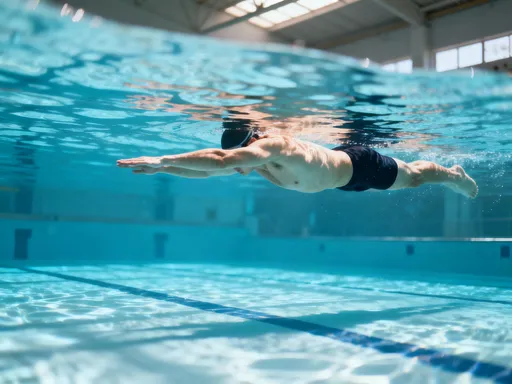
Perhaps most importantly, water promotes neutral spinal alignment. On land, poor posture habits are reinforced by gravity pulling the body into slumped positions. In water, however, the body naturally floats in a horizontal plane, encouraging the spine to maintain its natural curves. When swimming with proper technique, the core muscles engage to stabilize the torso, reinforcing postural control. This repeated practice of maintaining alignment in a supportive environment helps retrain the neuromuscular system. Over time, the brain and body learn to recognize what balanced posture feels like, making it easier to carry that awareness into daily activities. Water, in this way, becomes a classroom for the body—a place where correct movement patterns can be learned and reinforced without strain.
Swimming vs. Land-Based Exercise: A Different Kind of Adjustment
While running, weightlifting, and cycling are excellent for cardiovascular health and strength, they often emphasize specific muscle groups and movement patterns that can perpetuate imbalances. Running, for example, is a repetitive, unilateral motion that places consistent impact on one side of the body at a time. Over time, even minor asymmetries in gait can lead to hip misalignment or knee pain. Weight training, if not performed with careful attention to form, can strengthen dominant muscles while neglecting weaker ones, creating what physical therapists call 'muscle dominance patterns.' These imbalances may go unnoticed until they manifest as pain or injury.
Swimming, by contrast, is a bilateral, full-body activity that promotes balanced development. Each stroke requires coordinated movement from both sides of the body, encouraging symmetry in muscle activation. The resistance of water is evenly distributed, meaning that every limb movement encounters uniform opposition. This helps prevent overdevelopment on one side and supports equal strength in opposing muscle groups—such as the front and back of the shoulder, or the abdominal and back muscles. This balanced engagement is crucial for maintaining spinal stability and joint health.
Moreover, swimming emphasizes full-range motion in ways that few land exercises can match. The arm pull in freestyle, for instance, requires the shoulder to move through a complete arc, engaging stabilizing muscles that are often underused in daily life. The flutter kick in backstroke activates the deep core and hip flexors while maintaining spinal neutrality. These movements help restore mobility in joints that have become stiff from prolonged sitting. Because water provides resistance in all directions, every motion becomes a form of functional strength training—one that mirrors the multidirectional demands of real-life movement. This makes swimming not just a workout, but a form of movement rehabilitation.
Key Strokes for Structural Balance: What Works and Why
Not all swimming strokes are created equal when it comes to postural correction. Each stroke engages the body differently, offering unique benefits for alignment and muscular balance. Freestyle, the most common stroke, promotes shoulder mobility and core engagement. When performed with proper technique—head aligned with the spine, body rotating smoothly—the stroke encourages thoracic spine rotation and strengthens the serratus anterior, a key muscle for healthy shoulder positioning. This can help counteract the rounded shoulders associated with desk work. However, poor freestyle form, such as crossing the hand over the centerline during the catch, can strain the shoulder joint, so attention to technique is essential.
Backstroke is particularly beneficial for individuals with forward head posture or tight chest muscles. Because the swimmer lies on their back, the chest naturally opens, and the shoulders retract. This position stretches the anterior shoulder and pectoral muscles while strengthening the upper back and posterior deltoids. The continuous rotation of the arms overhead also improves shoulder flexibility and scapular control. For those who spend hours looking down at screens, backstroke offers a gentle yet effective way to reverse the postural habits of modern life.
Breaststroke, when executed correctly, supports hip and spinal alignment. The simultaneous leg kick and arm pull encourage coordination and core stability. However, a common mistake—lifting the head too high during breathing—can strain the neck and disrupt spinal alignment. When performed with a neutral neck and a controlled glide phase, breaststroke can enhance proprioception and promote rhythmic, balanced movement. For individuals seeking low-impact exercise that still challenges coordination and symmetry, breaststroke is an excellent choice. A balanced swimming routine might include a mix of these strokes to target different aspects of postural health, ensuring comprehensive muscular development and joint mobility.
Beyond the Pool: How Swimming Influences Daily Movement
The benefits of swimming extend far beyond the water. Regular swimmers often report noticeable changes in how they stand, walk, and sit. One of the most common observations is improved posture. After consistent swimming, many people find they naturally stand taller, with shoulders back and head aligned over the spine. This is not just a temporary effect; it reflects lasting neuromuscular retraining. The body begins to internalize the alignment patterns practiced in the water, making them more accessible in daily life. This carryover effect is especially valuable for those who work in sedentary environments, where postural awareness tends to diminish over time.
Another significant benefit is enhanced body awareness, or proprioception. Swimming requires precise control of movement in a three-dimensional environment, which sharpens the brain’s ability to sense where the body is in space. This heightened awareness translates to better balance, coordination, and movement efficiency on land. Swimmers often report feeling more graceful, with smoother transitions between movements and a reduced risk of tripping or stumbling. This is particularly important as people age, when balance and coordination naturally decline. By maintaining strong proprioceptive skills, swimming helps preserve functional independence and reduces the likelihood of falls.
Many swimmers also describe a subjective sense of lightness and ease. After a swim, movements feel less effortful, and chronic tension in the neck, shoulders, and back often diminishes. This is not merely psychological; it reflects real physiological changes. The combination of muscle relaxation, improved circulation, and joint decompression creates a state of physical reset. People who once felt 'stuck' in their bodies begin to move with greater freedom. This shift can have a ripple effect on overall well-being, influencing mood, energy levels, and even sleep quality. The pool, in this sense, becomes a sanctuary not just for the body, but for the mind.
Building a Sustainable Routine: Frequency, Form, and Recovery
To achieve meaningful postural benefits, consistency is key. For most adults, swimming 3 to 4 times per week for 30 to 45 minutes per session is sufficient to see noticeable improvements in alignment and mobility. The focus should be on technique rather than speed or distance. A slow, controlled swim with proper form is far more effective for postural retraining than a fast, sloppy one. Beginners should start with shorter sessions and gradually increase duration as endurance improves. It’s also important to include a proper warm-up and cooldown. A few minutes of gentle swimming or water walking before the main set helps prepare the joints and muscles, while a slow cool-down promotes recovery and reduces stiffness.
Form is paramount. Poor technique can reinforce bad movement patterns or even lead to injury. Swimmers should pay attention to head position, body rotation, and stroke mechanics. Working with a qualified coach, even for a few sessions, can make a significant difference in developing efficient, alignment-friendly technique. Video analysis, when available, is a powerful tool for identifying subtle flaws in form. Additionally, incorporating brief dryland exercises—such as core stability drills or shoulder mobility work—can complement swimming and enhance overall results. However, these should be minimal and focused on supporting, not replacing, the aquatic work.
Recovery is equally important. While swimming is low-impact, it still places demands on the body. Adequate rest between sessions allows muscles and connective tissues to adapt and strengthen. Hydration and nutrition also play a role in supporting recovery and maintaining joint health. Listening to the body’s signals—such as fatigue, soreness, or discomfort—is essential for avoiding overtraining. A sustainable routine is one that can be maintained over months and years, not just weeks. By prioritizing form, consistency, and recovery, swimming becomes not just a workout, but a lifelong practice of physical care.
When to Seek Expert Guidance: Knowing the Limits of Self-Correction
While swimming offers remarkable benefits for posture and alignment, it is not a substitute for professional medical evaluation. Individuals with pre-existing conditions—such as herniated discs, chronic joint pain, or neurological disorders—should consult a healthcare provider before beginning a swimming program. In some cases, certain strokes or movements may need to be modified to avoid aggravating an injury. A physical therapist or certified aquatic therapist can provide personalized recommendations based on an individual’s specific needs.
Additionally, those recovering from surgery or significant musculoskeletal injury should seek guidance from a rehabilitation specialist. Aquatic therapy, a clinically supervised form of exercise in water, is often used in medical settings to support recovery. It combines the benefits of buoyancy and resistance with targeted therapeutic movements. For individuals unsure of their technique or struggling with persistent pain, working with a professional ensures safety and maximizes effectiveness. Swimming is most powerful when integrated into a broader wellness strategy that includes medical oversight, proper nutrition, and mindful movement.
Conclusion
Swimming is more than just a way to stay fit—it is a powerful tool for restoring and maintaining the body’s natural alignment. In a world where sedentary habits and screen-based living dominate, the water offers a rare opportunity to reset, rebalance, and renew. Its unique combination of buoyancy, resistance, and full-body engagement makes it unmatched in promoting structural health. Unlike many forms of exercise that wear the body down over time, swimming supports it, allowing for sustainable, lifelong movement. The changes it brings—better posture, reduced pain, improved coordination—are not just physical; they enhance quality of life in tangible ways. By viewing fitness not as punishment but as intelligent, respectful movement, we honor the body’s design and invest in long-term well-being. If you’ve ever felt misaligned by modern life, the pool may be the place where you finally find your balance.